
If you have a 100% blocked coronary artery and have been told it cannot be treated, this is the page that explains what CTO PCI is, who performs it, and what is actually possible in expert hands.
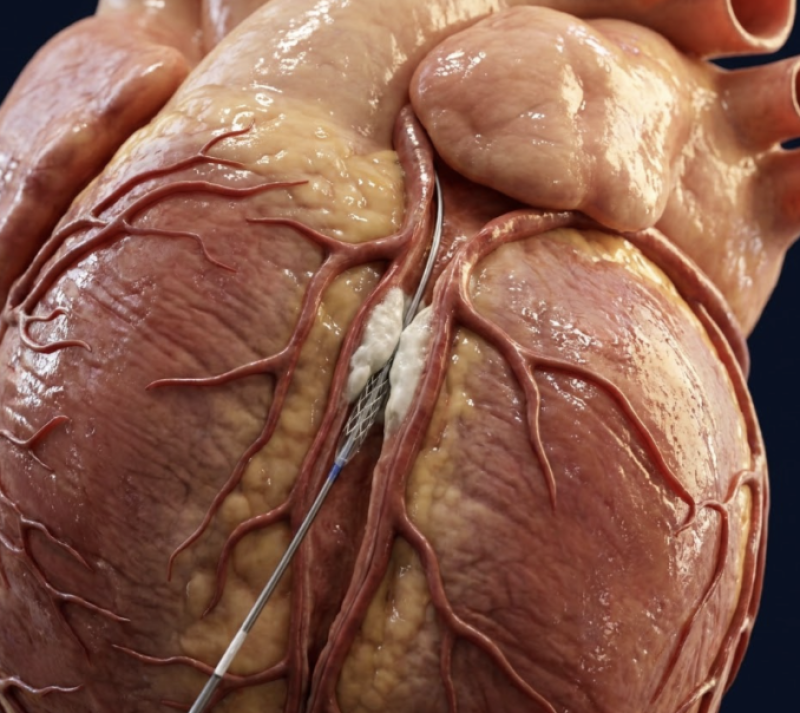
A Chronic Total Occlusion (CTO) is a coronary artery that has been completely blocked – zero blood flow through the vessel – for at least three months. Unlike a partial blockage, where some residual channel allows blood to pass, a CTO represents total arterial obstruction. Over months and years, the blocked segment fills with dense, fibrotic, often calcified tissue that resists the standard techniques used in conventional angioplasty.
CTOs are more common than most patients realise. Approximately 20–30% of patients who undergo coronary angiography have at least one CTO. Yet historically, fewer than 10% of those CTOs were treated with PCI. The gap between how many patients have CTOs and how many receive treatment reflects a shortage of trained specialists – not a shortage of patients who would benefit.
Untreated CTOs are associated with chronic stable angina, reduced left ventricular function, higher long-term mortality, and significantly reduced quality of life. Viable heart muscle supplied by a chronically occluded artery exists in a state called hibernation – alive, but not contracting properly. Successful CTO PCI can restore that function.
Standard angioplasty threads a guidewire through a narrowed – but still open – artery, then inflates a balloon and deploys a stent. This works when there is still some residual channel, even a tiny one, for the wire to follow. In a CTO, there is no channel. The wire must navigate through completely occluded, often calcified and fibrotic tissue. The proximal cap – the hard entry point – may be ambiguous or encased in calcium. The occlusion body may span centimetres. The distal vessel beyond the blockage must be reached by threading equipment through a zone the wire crosses essentially blind.
CTO PCI typically takes 2-4 hours. It requires dual arterial access (catheters from both the wrist and the groin), specialised microcatheters, dedicated CTO guidewires, and in selected cases the CrossBoss catheter and Stingray balloon system. It demands a procedural volume and range of technique that most interventional cardiologists – even highly experienced ones – do not have. This is why the outcome at a dedicated CTO programme is dramatically different from the outcome at a general cardiac catheterisation laboratory.
across the United States and India - placing him in a very small global cohort of operators who have independently crossed this volume threshold.
ranked the No. 1 hospital for heart care in the United States for 30 consecutive years (1995–2024) by U.S. News & World Report. Fewer than a handful of Cleveland Clinic-trained interventional cardiologists practise full-time in South Asia.
Internal Medicine (2005), Cardiovascular Disease (2009), Interventional Cardiology (2010). This triple certification is held by very few cardiologists in India.
the physician who sets the guidelines for CTO intervention across South and Southeast Asia. The definitive escalation point for complex and failed CTO cases in the subcontinent.
published in Catheterization and Cardiovascular Interventions, 2023. K14 stands for Kalyanasundaram - his nickname from fellowship days at the Cleveland Clinic. One of the few CTO innovations worldwide to bear its author's name. Adopted internationally.
TCT, TCTAP, ESC, SCAI, TOBI, MyLive, CCT, CTO Club Japan, and more.
in JACC, Circulation, Heart Lung and Circulation, and leading interventional cardiology journals. Co-author of the Global CTO Crossing Algorithm (JACC 2021) and co-first author of the Global CTO Safety Consensus (HLC 2024).
At the start of every CTO case, Dr. Arun performs a systematic angiographic analysis: proximal cap morphology, occlusion length, degree of calcification and tortuosity, collateral vessel quality, and distal target vessel size. A J-CTO complexity score guides initial strategy selection. The algorithm specifies when to escalate, when to switch strategies, and when the case is anatomically complete.
First-line strategy for most CTO cases. A specialised guidewire is navigated forward through the proximal cap and occluded body, aiming to re-enter the true lumen beyond the blockage. Modern CTO guidewires range from soft polymer-coated wires for straightforward anatomy to stiff, tapered penetration wires for hard fibro-calcific caps. Microcatheters provide support, steerability, and the ability to change wires mid-procedure. Dr. Arun contributed to the JACC Asia 2025 paper on new frontiers in antegrade wiring from the Asia-Pacific CTO Club.
For ambiguous caps, long occlusions, or tortuous anatomy where direct wire navigation is not possible. The CrossBoss catheter creates a controlled dissection in the subintimal space alongside the CTO body. The Stingray system then re-enters the true lumen beyond the blockage. Dr. Arun developed and published the K14 Stingray CART technique – a novel modification that addresses a specific failure mode in standard Stingray re-entry. K14 stands for Kalyanasundaram. Published 2023. Adopted internationally.
For the most challenging CTOs where antegrade approaches cannot cross the occlusion. A wire is navigated backward through collateral channels – septal perforators or epicardial collaterals – that connect the vessel beyond the blockage to another coronary artery. The operator works from both directions simultaneously using CART and Reverse CART techniques. Dr. Arun is a published author on retrograde CTO PCI outcomes through the PROGRESS-CTO Registry.
CHIP PCI with haemodynamic support is designed for exactly this patient.
Native vessel CTO PCI may offer a better long-term solution than graft re-intervention.
Persistent chest pain is not inevitable if the underlying blockage can be safely treated.
CTO anatomy, zero blood flow, collateral vessels, wire crossing strategy diagram. Commission from medical illustration library.
Dr. Arun explains CTO PCI in patient-friendly language. Embed YouTube with VideoObject schema.
Minimum 3 patient testimonials relevant to CTO PCI. Pull from Google Reviews. Include one video testimonial.
We admitted my mother to Promed Hospital for a heart problem. Since she already had kidney and neuro issues, even doing an angiogram was slightly risky. But the doctors handled everything with so much care and confidence.
They found a CTO (100% heart block) and suggested a CTO procedure. Dr. Arun, one of the best CTO specialists, handled it perfectly with extreme care and dedication. Honestly, Dr. Arun didn’t just treat my mother’s heart – he gave my life back.
Some doctors treat patients, but very few heal families with hope, care, and humanity. Dr. Arun is one among those rare souls.
Being one of the best CTO specialists, he handled my mother’s critical condition with so much dedication and confidence. But more than his medical expertise, it was his kindness, patience, and genuine concern that touched our hearts deeply.
He didn’t see my mother as just another patient – he treated her like family. In one of the hardest moments of our life, he gave us hope, strength, and a second chance.
A doctor’s duty is to save lives, but Dr. Arun went beyond that. We will forever be grateful for his care, support, and humanity. 🙏
He is not only an excellent cardiologist but also a truly kind human being. He suggested the best neuro and ortho doctors for my mother as well. My mother was unable to walk properly, but he genuinely cared and did everything possible to help her recover.
What touched me the most is that he didn’t care only about the heart problem – he cared about the person as a whole.
I will always be grateful to Dr. Arun for everything he has done for my mother and our family. Lifelong thanks to him. 🙏
We are extremely thankful to Dr.Arun Kalyanasundaram for successfully performing my father’s PCI for a complex CTO. The doctor’s skill, confidence, and clear explanation gave us great reassurance during a very stressful time.His aura and positive attitude makes us to forget all the chaos. The procedure was handled with utmost precision, and the care provided throughout was truly exceptional.Highly recommend him for anyone in need of expert cardiac care.
I(Nandikolla Gangaraju) had gone RCA &LCX Angioplasty (CTO) done by Dr.Arun sir at ProMED hospital, Chennai.Dr.Arun sir has creates positive mind in patient. He is friendly doctor and wonderful and kind person who has given excellent care and attention to the patient.Dr.Arun sir is really well experienced and expert in CTO PCI.Thank you Dr.Arun sir for excellent treatment you have done to me .Thanks to your team members also sir.
Yes, in most cases. CTO PCI is a catheter-based procedure performed through small punctures in the wrist or groin. There is no open surgery, no general anaesthesia, and no sternotomy. In experienced hands at high-volume CTO programmes, the technical success rate is 85–95%. The key variable is having an operator trained in all three crossing strategies so that if one approach does not work, others can be attempted in the same session.
Many CTO patients have chronic stable angina — chest pain or tightness on exertion that has been present for months or years. Some have breathlessness on exertion from reduced left ventricular function. Some have no symptoms at all if the collateral vessels are well-developed. CTOs are sometimes discovered incidentally during angiography performed for another reason — evaluation of a partial blockage in a different vessel, for example.
Most patients stay in hospital for one to two nights. Access site care for the wrist or groin takes a few days. Most patients return to light activities within a week and full activity within 2–4 weeks. Dual antiplatelet therapy — aspirin plus clopidogrel or ticagrelor — is prescribed for 12 months after drug-eluting stent placement. Follow-up at 4–6 weeks and repeat echocardiogram at 3–6 months is standard.
Dr. Arun Kalyanasundaram is among the most experienced and internationally recognised CTO PCI specialists in India and the Asia-Pacific region. He has performed over 2,500 CTO PCI procedures across the United States and India, is Cleveland Clinic trained, is triple ABIM board-certified, serves as Asia-Pacific CTO Club Director for India, and is the inventor of the K14 Stingray CART technique published in Catheterization and Cardiovascular Interventions in 2023.
CTO PCI typically takes 2–4 hours, considerably longer than standard angioplasty. The procedure requires dual arterial access from both the wrist and groin, specialised microcatheters, dedicated CTO guidewires, and in selected cases the CrossBoss catheter and Stingray balloon system. The duration depends on occlusion complexity, the crossing strategies needed, and whether retrograde access through collateral channels is required.
At high-volume CTO programmes with full crossing strategy range — antegrade wiring, antegrade dissection re-entry, and retrograde — the technical success rate is 85–95%. Success rates at general cardiac catheterisation laboratories without dedicated CTO operators are markedly lower. The single most important predictor of CTO PCI success is operator volume and training in all three crossing strategies.
For appropriately selected patients, CTO PCI offers comparable symptomatic relief and quality of life improvement with shorter recovery, no sternotomy, no general anaesthesia, and lower procedural mortality. CTO PCI is particularly favoured for patients declined for bypass surgery, those with failed prior bypass grafts, single-vessel CTO disease, or significant comorbidities. The choice between CTO PCI and bypass depends on anatomy, comorbidity, and operator availability — a second opinion is warranted before any irreversible decision.
K14 Stingray CART is a novel modification of antegrade dissection re-entry (ADR) for CTO PCI, invented and published by Dr. Arun Kalyanasundaram in Catheterization and Cardiovascular Interventions in 2023. It solves a specific failure mode in the standard Stingray re-entry step. K14 stands for Kalyanasundaram — Dr. Arun's nickname from fellowship days at the Cleveland Clinic. The technique has been adopted internationally and is one of the few CTO innovations worldwide to bear its author's name.
+91 94807 94807
director@ctomd.com
Among India’s most experienced CTO PCI specialists.
Cleveland Clinic-trained.
Asia-Pacific CTO Club India Director.
Dr. Arun Kalyanasundaram is a Chennai-based CTO PCI specialist providing advanced coronary intervention, CTO angioplasty, blocked artery treatment, second opinions, and treatment planning for patients from Mumbai, Delhi, Bangalore, Hyderabad, Pune, Kolkata, Ahmedabad, Chandigarh, Kochi, Visakhapatnam, and throughout India.
Promed Hospital
1/10A East Coast Road, Kottivakkam
Chennai, Tamil Nadu 600041